
Free Speech
Free speech is a cornerstone of a healthy democracy and a fundamental right that benefits us all. It must be protected, alongside the right of everyone to live safely and peacefully.
WHAT’S HAPPENING WITH FREE SPEECH IN THE UK?
We’re fortunate to live in a diverse nation shaped by many identities and perspectives. With this comes differences of opinion and sometimes views that could be unpopular or could upset or offend others.
Our right to freedom of expression – through art, at protests, and on social media – is protected under Article 10 of the European Convention on Human Rights. However, this right is not absolute, meaning certain speech may become unlawful when it crosses clear legal thresholds, including inciting hatred, harassment, or violence.
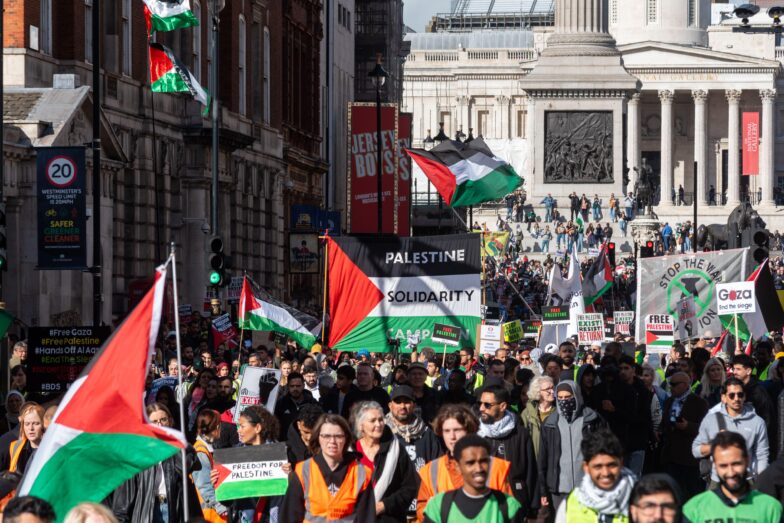
This area of law has become increasingly complex. We’ve seen the Government and authorities seek to introduce blanket bans on chants at protests, arrest people for social media posts and messages, and impose travel bans on political commentators coming to the UK.
Coupled with restrictive anti-protest laws and vague counter-terror legislation, people are finding it harder to know what they can or cannot say. Recent polling showed that, in the last two years, 42% of people felt their ability to express controversial opinions without facing legal consequences has got worse.
It’s clear that free speech and the laws governing it has become the next political battlefield. Some have criticised the Government of ‘two-tier policing’, while others are calling for a US-style absolutist stance on free speech. Recent polling backs this up: 51% feel that their confidence in the UK Government to protect the right of people to express their views, even if it disagrees with them, has got worse.
WHY SHOULD WE BE CONCERNED?
Context helps us determine when speech might tip into hate speech. The same words can have very different effects and risks depending on who is speaking, to whom, with what intent and in what circumstances. The line for speech becoming unlawful is high because, without the right to offend, even deeply, it is not truly freedom of expression. But speech that curtails other rights and freedoms, such as speech that tips into hate, harassment, and incitement to violence, should be restricted.
Blanket bans on chants and phrases are deeply concerning because they risk ignoring context, risk state overreach, and may lead to unnecessary criminalisation of lawful speech.
This can also have a chilling effect on protest undermining people’s long-standing right to stand with others, speak out and challenge those in power without fear of arrest.
There is also concern about over-policing speech, particularly where arrests are unlikely to result in prosecution. It risks turning policing into a political tool, creating an even more restrictive environment for freedom of speech and expression.
Over-policing speech makes our society more polarised, our population more alienated and our country more divided. People should be able to live in a society that enables them to speak openly, disagree freely, and express differences without fear of criminalisation.
WHAT ARE WE CALLING FOR?
We want to continue to live in a society that maintains people’s rights to express those differences and share them with others.
While there is no dismissing the harm or intimidation some speech can cause, protecting people from offence must not come at the cost of eroding free speech. Doing both well requires a careful balance of safeguarding individuals’ right to express differences without fear of state intervention, while upholding others’ right to live free from fear and violence.
Liberty aims to play an explanatory role to help clarify the line between lawful and unlawful speech, so that people feel confident on speaking out on issues that are important to them.
We will do this by assessing each act (of speech or expression) using established human rights frameworks, considering whether the act crosses legal thresholds such as inciting hatred, harassment, or violence against people for who they are (e.g. race, religion, gender, disability, or sexual orientation).
In an increasingly unstable and polarised world, where individuals and communities are deeply affected by events around them, and where some seek to exploit these divisions, it is more important than ever to adopt a balanced and consistent approach to free speech across the political spectrum.
HELP US PROTECT FREE SPEECH IN THE UK


I'm looking for advice on this
Did you know Liberty offers free human rights legal advice?
What are my rights on this?
Find out more about your rights and how the Human Rights Act protects them
Did you find this content useful?
Help us make our content even better by letting us know whether you found this page useful or not