
Digital ID
The Government’s proposed digital ID card is presented as a way to simplify right-to-work checks and access to services, but instead raises serious questions about privacy, surveillance, and exclusion. We’re calling on the Government to build a digital ID system that is either protects and upholds our rights, or to not build one at all.
WHAT’S HAPPENING?
In September 2025, the Government announced that by the end of this Parliament, all working adults would need digital ID cards. They said the scheme would be designed to crack down on illegal immigration.
They have since backtracked on this plan. Now, they claim digital ID won’t be mandatory and will be focused on improving access to public services.
This isn’t the first time a government has tried to introduce digital ID. 20 years ago, Tony Blair’s Identity Cards Act cost over £4.6 billion, was fiercely opposed (including by Liberty), and eventually scrapped in 2010.
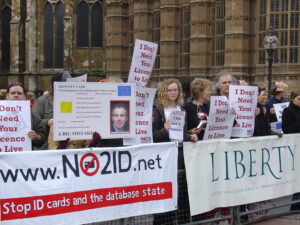
Since then, our lives have become increasingly digitalised. There is a greater need for safe and secure ways to prove our identities, but decades of data scandals and faulty programs suggest we should be sceptical of the Government’s ability to get this right and keep our data safe.
That’s why it’s vital that any digital ID system is designed with privacy and human rights at the forefront.
WHY SHOULD WE BE CONCERNED?
The Government’s plan for digital ID
In Spring 2026, the Government publicly consulted on their digital ID system. There is a huge gap between their claim that it will centre privacy and user control and the proposals they have put forward.
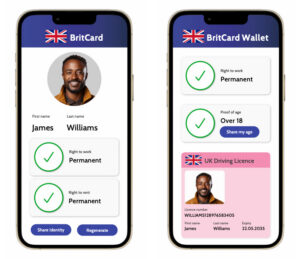
The Government is proposing a digital ID system that includes:
- an ID which will have a biometric photo of you
- a system that checks your right to work
- connecting different data systems via one single unique ID for each person.
The last part is what we are most worried about. The Government wants to connect all our information from health to housing, immigration status to our income. This is intrusive and risks our personal information being used in ways we have not agreed to.
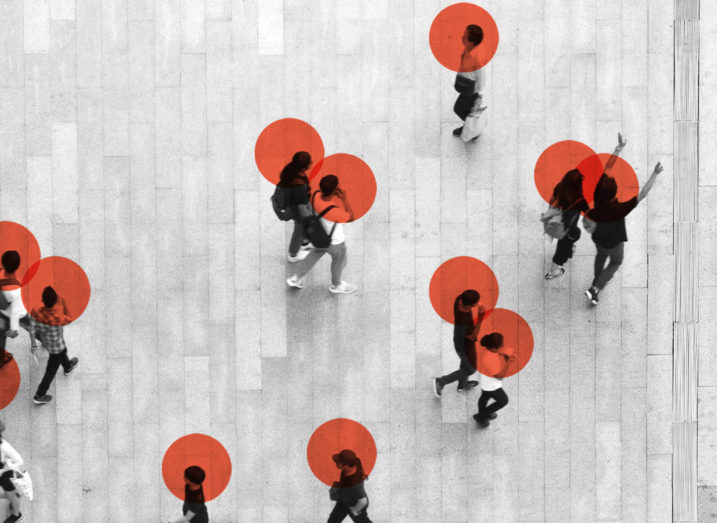
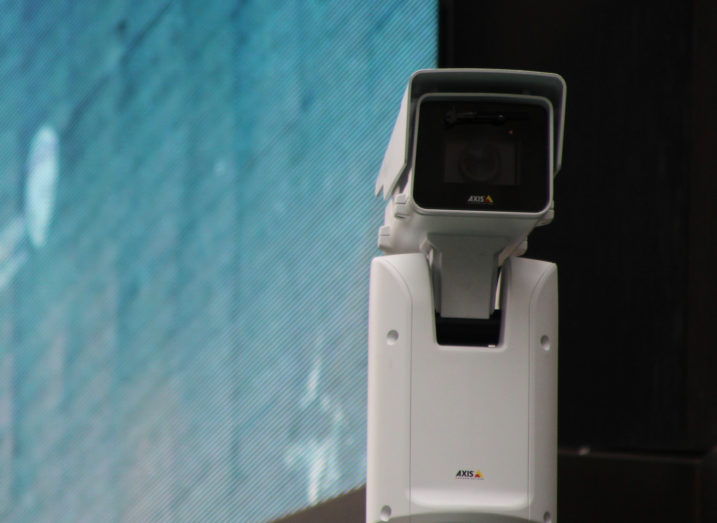
Not only this, but they’ve proposed a system that could allow the Government to record every time we want to use our digital ID. Tracking when, where, and why we’ve used it.
They also want to build it on the same foundations as OneLogin, a system that failed to meet the minimum cybersecurity standards set by the Government themselves.
There is a risk, built in by the Government, that the digital ID will extend across the state. We are concerned about the system becoming mandatory by the backdoor. If a digital ID becomes the de facto way to engage with public services, digitally excluded communities risk being left out.
Despite maintaining that digital ID will be built with privacy at the forefront, the Government’s proposals get the fundamentals wrong, and the consequences could be serious.
You can read Liberty’s full analysis and response of the consultation here.
Digital exclusion
According to a 2024 report, 4% of Britons (around 2.1 million) are offline. There is a real risk that digital ID would disproportionately impact some of the most marginalised members of society – including those in poverty, people with disabilities, and the elderly – by locking them out of work, housing, and essential services they rely on.
Human rights at risk
The only digital ID use case the Government has committed to delivering this Parliament is a right-to-work checking system. We have seen where this leads. Research from the Migration Observatory found that migrants who remain in the UK despite hostile environment restrictions adapt their behaviour to avoid detection: avoiding healthcare, withdrawing their children from schools, and not reporting crimes. A digital ID system woven into public service access does not end this; it pushes people further into precarity and danger.
Mission creep
If the scope of digital ID creeps and it becomes de facto mandatory to access public services, it would fundamentally change the way we live our daily lives in a way that would be hard to reverse. Once a system exists, it would be easy for current or future governments to bolt more things on.
This means that one day we could find ourselves facing check points for more things we take for granted. Like going to the doctors or sending our kids to school.
WHAT ARE WE CALLING FOR?
If the Government is serious about digital ID, it needs to be voluntary and inclusive from the start. With clear safeguards around how data is collected, stored, and shared.
That’s why Liberty is calling for a robust digital ID system that promotes privacy, respects our rights, and offers digital convenience – for those who want it.
For digital ID to be rights-respecting and safe, it must include the following features as minimum conditions:
- Voluntary, always – The law must prevent mission creep. Digital ID must never quietly become compulsory.
- Privacy is not a feature, it’s the foundation – The whole system is built around protecting your data from day one, which means no database linking and no tracking where and when we use digital ID.
- Clear purpose, hard limits – Digital ID must be for proving who you are in a privacy protected way – not for immigration, not for policing, and not for government surveillance. There must be limits on when you can be asked for digital ID.
- No digital ID? No problem – You must always have the right to choose a non-government provider or show a physical document instead.
- State-of-the-art security – It must be protected with the strongest cryptography and a decentralised design so there’s no honeypot for hackers.
- Open to scrutiny, accountable to you – It must be built with an open-source code which can be audited, overseen by a regulator with real teeth and independence, and with a complaint mechanism we can all use easily.
A digital ID system that does not meet these requirements must not be built.





I'm looking for advice on this
Did you know Liberty offers free human rights legal advice?
What are my rights on this?
Find out more about your rights and how the Human Rights Act protects them
Did you find this content useful?
Help us make our content even better by letting us know whether you found this page useful or not