
COUNTER-TERROR
The UK’s definition on terrorism is so broad that it risks undermining people’s fundamental rights, including free speech and protest. We’re calling for a clearer definition and tighter laws to prevent the misuse of counter-terror powers, now and in the future.
WHAT’S HAPPENING?
We all want to live in a society that keeps us safe whilst respecting and protecting our rights.
That’s why we need robust laws that protect us across changing governments and political priorities.
In recent years, the UK’s application of the terrorism definition has expanded significantly. Most recently, Liberty intervened in a High Court case, challenging the proscription of Palestine Action as a disproportionate use of counter-terror powers.
Laws that were designed to address serious threats to national security are increasingly being used beyond their original purpose. Liberty believes the UK’s definition of terrorism is so broad that it risks undermining people’s fundamental rights, including free speech and protest.
A clearer definition would ensure this law remains a vital tool for public safety and national security, and not open to misuse.
WHAT IS THE UK’S DEFINITION OF TERRORISM?
At the turn of the millennium, the Labour Government introduced a new definition through the Terrorism Act 2000, with three requirements for something to be considered terrorism.
It is the use or threat of action inside or outside the UK that:
- Involves:
(a) Serious violence against a person,
(b) Serious damage to property,
(c) Endangers a person’s life other than the one committing the action,
(d) Creates a serious risk to the health and safety of the public or a section of the public or,
(e) Is designed seriously to interfere with or seriously to disrupt an electronic system.
This use or threat of action must be:
2. designed to influence the government or to intimidate the public or a section of the public; and
3. for the purpose of advancing a political, religious or ideological cause.
- Any action that satisfies (1) and (3) above and involves the use of firearms or explosives is terrorism even if (2) is not satisfied.
- Any action taken for the benefit of a proscribed organisation is also terrorism.
The Act expanded the definition of terrorism to include religious and ideological beliefs rather than just political motives.
It also added property damage as an act of terrorism and widened the law around proscription, making it a criminal offence to be a member of these banned organisations.
Liberty led the sector in challenging the Act as it went through Parliament, arguing that these changes were extremely broad and already covered by existing criminal laws. We warned that without adequate safeguards, this new definition could be open to misuse.
HOW COUNTER-TERROR LAWS ARE BEING ABUSED
Since the Terrorism Act came into effect in 2001, successive governments have expanded the offences that come from the definition, making its interpretation so wide-ranging that it captures behaviours most people wouldn’t consider terrorism, such as the toppling of the Edward Colston statue in Bristol.
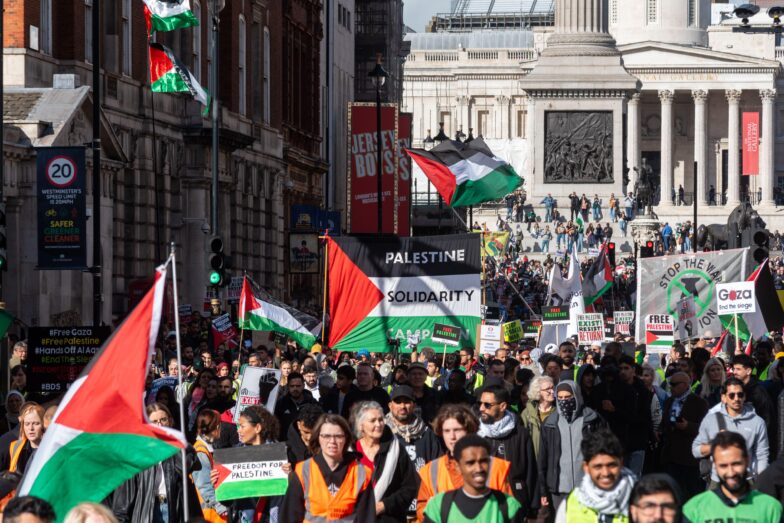
Most recently, these laws have been used to proscribe direct action group Palestine Action for breaking into RAF base Brize Norton and spray-painting two military planes.
Liberty alongside Amnesty UK intervened in the High Court case against Palestine Action’s proscription, arguing that this was a disproportionate use of counter-terror powers. In February 2026, the Court of Appeal ruled the proscription was unlawful. The Government announced plans to appeal this decision.
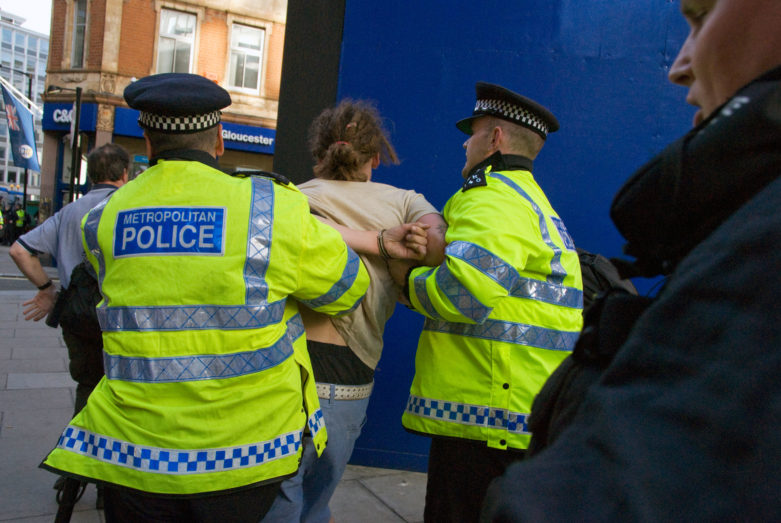
There have been more than 2,000 arrests of protesters related to the proscription of Palestine Action, with more than 250 people charged under the Terrorism Act – illustrating the far-reaching consequences of these powers.
This case is critical because it concerns the ability for current and future governments to use counter-terror laws to address things unrelated to terrorism.
Why should we be concerned?
Direct action is a protest tactic that has historically been used to show dissent and demand change from those in power, from the suffragette movement to modern environmental and social justice campaigns. Under today’s application of the terrorism definition, similar protest movements are at risk of being caught under counter-terror powers.
The proscription of Palestine Action and subsequent court case has raised the need to clarify the line between direct action and terrorism. And a YouGov poll released last year shows how split the public are on the Government’s decision here.
When it’s not clear what counts as terrorism, public trust collapses and without trust, counter-terror laws simply don’t work.
Additionally, the definition of terrorism is so wide-ranging that current and future governments could use counter-terror laws against groups that are not terrorists, something that has happened in other countries to target opponents, minorities, and activists.
There is an urgent need to update the current definition of terrorism to enable current, and future governments to uphold their duty to safeguard the public and national security, whilst protecting people’s rights and preventing overreach.
What are we calling for?
The UK is at a critical moment for the protection of human rights.
Counter-terror laws must be robust enough to address genuine threats, without granting excessive powers that can be applied too broadly.
That’s why we’re calling for a revised definition of terrorism in the UK.
In 2025, Bingham Centre published a report with over 100 recommendations across the UK’s counter-terror legislation, including the terrorism definition (see page 21 for their recommendations, and pages 58-69 for the definition chapter).
Based on their recommendations, we want to see:
- Change ‘influence’ a government in the definition to ‘coerce, compel or subvert’ a government. ‘Influence’ is extremely broad.
- ‘Serious damage to property’ should only be considered terrorism if the act of threat of action:
- (i) creates a serious risk to life, or
- (ii) creates a serious risk to national security or the health and safety of the public or a section of the public, or
- (iii) uses arson, explosives, or firearms.
- Remove this from the definition: Any action that satisfies (1) and (3) above and involves the use of firearms or explosives is terrorism even if (2) is not satisfied.
This would give prosecutors clearer and stronger tools to effectively address evolving terrorist threats, while keeping people safe, better protecting the public and upholding our human rights.

I'm looking for advice on this
Did you know Liberty offers free human rights legal advice?
What are my rights on this?
Find out more about your rights and how the Human Rights Act protects them
Did you find this content useful?
Help us make our content even better by letting us know whether you found this page useful or not