
Human Rights Act, ECHR and Government accountability
Seven stories that prove we need the European Convention on Human Rights
Posted on 20 Apr 2026
For decades, the European Convention on Human Rights (ECHR) has protected our freedom to speak out, to protest, to love who we choose and to live in peace.
Crucially, it forces our public authorities – like the Government, police, and local councils – to respect our human rights.
And if they don’t, it’s the ECHR that brings us justice.
1. THE ECHR PROTECTS US FROM DISCRIMINATION
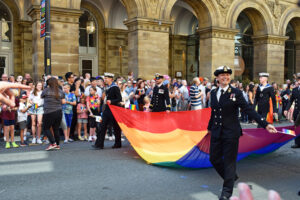 Until the year 2000, LGBT people were banned from serving in the Armed Forces.
Jeanette Smith served in the RAF for 5 years and Graeme Grady served in the Armed Forces for 10 years. In 1994, they were both investigated by the Ministry of Defence (MoD) and dismissed because of their sexual orientations.
Alongside two other service members, they tried to challenge this in the UK courts, but their application was rejected. So they took their case to the European Court of Human Rights, backed by Liberty and Stonewall.
In 1999, the European Court ruled in favour of Smith and Grady. The MoD’s investigation and dismissal from service breached Article 8 of the ECHR – the right to respect their private lives – and was ruled unlawful.
The Court’s judgment led to the MoD introducing a new policy in the year 2000. This lifted the ban on LGBT people serving in the military.
2. THE ECHR PROTECTS WORKERS’ RIGHTS
Mr Wilson was employed as a journalist at the Daily Mail in 1989 and a member of the National Union of Journalists. He was sent a letter stating that his pay rise was conditional on him signing a personal contract that would remove his right to be represented by a union. Mr Wilson refused to sign, and he received a lower pay rise than his colleagues who signed the new contract.
UK law at the time did not prevent employers from taking this action against union members.
Mr Wilson and others took the case to the European Court of Human Rights. They argued that their right to freedom of association (Article 11) of the ECHR had been infringed, and won.
The ruling forced the Government to fix the legal loophole that made pay rises conditional on opting out of union representation.
3. THE ECHR PROTECTS US FROM MODERN SLAVERY
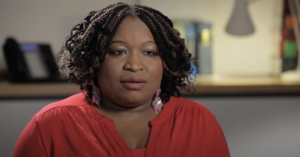 Patience Asuquo was a domestic worker and nanny brought from Nigeria to the UK. Her ‘employer’ forced her to work for free and abused her for over two years.
When Patience escaped, there was no criminal offence for modern slavery at the time, so the police did not investigate or prosecute.
With Liberty’s help, she used Article 4 of the ECHR (freedom from slavery and forced labour) to get her case reopened and a promise to improve police officer training for similar cases.
Her case helped create of the Modern Slavery Act 2015, which has helped many more survivors of slavery get justice.
4. THE ECHR PROTECTS OUR RIGHT TO STRIKE
Fiona Mercer, a care worker and UNISON representative, was suspended by her employer after participating in strike action.
Upon taking her case to court, Fiona was told that taking industrial action was not considered a “protected activity” under the relevant trade union laws.
Fiona, with the help of UNISON, appealed to the Supreme Court.
They ruled that the lack of legal protection against suspension or disciplinary action for taking part in lawful industrial action violated Article 11 of the ECHR (freedom of assembly and association).
In 2025, the Employment Rights Act updated the law to protect anyone taking part in lawful industrial action from unfair dismissal.
5. THE ECHR PROTECTS FREEDOM OF THE PRESS

Journalist William Goodwin was taken to Court by a software company for refusing to reveal the name of a source who had leaked to him information on their finances. The UK courts ordered him to reveal the identity of his source, but he refused on the grounds that a journalist should be able to protect their sources.
He was fined £5,000 for contempt of court and escalated his case to the European Court of Human Rights.
In 1996, the European Court ruled that the protection of sources is one of the basic conditions of press freedom and sources should only be revealed if there is a large public interest (in this case, there wasn’t).
The order requiring him to reveal his source was found in breach of Article 10 of the ECHR (freedom of expression). It violated his right to receive and give out information.
William never revealed the identity of his source and his case was used by the UK courts during similar cases, to avoid the same problem happening again.
6. THE ECHR PROTECTS OUR RIGHT TO EXPRESS OUR RELIGION

In 2006, Nadia Eweida was suspended without pay from her job at British Airways (BA). She refused to cover up her cross necklace – a sign of her Christian faith – which violated company uniform policy.
She complained to the UK courts that BA’s policy had stopped her from expressing her faith, but they rejected her claims. Her only route to justice was to take the case to the European Court of Human Rights, supported by Liberty.
The European Court recognised that Nadia had been discriminated against because of her faith. They ruled that BA had violated her freedom of religion (Article 9 of the ECHR).
Subsequently, BA changed their policy to allow the display of religious and charity symbols and Nadia returned to work.
The UK Government also took steps to ensure courts and employers understood the importance of religious freedoms and how to assess it in future cases.
7. THE ECHR PROTECTS OUR PRIVATE LIVES
Ms Copland was an assistant to the principal of a further education college in Wales.
At her boss’s instruction and without her consent, her workplace began to monitor her phone calls, emails and internet activity following rumours she was in a relationship with another member of staff. This happened over a period of three years.
Supported by Liberty, she took the case to the European Court of Human Rights. She argued that the level of monitoring was inappropriate and she was entitled to privacy at work.
The European Court agreed with Ms Copland. There were no laws regulating the monitoring of employee’s emails at the time. This meant the monitoring was unlawful and breached Article 8 of the ECHR (her right to a private life).
This decision plugged a gap in the law in the absence of data protection legislation.
DEFEND THE ECHR
It’s not only the lives of those involved that have been changed for the better by the European Convention on Human Rights. Each of them has strengthened protections for all of us by forcing those in power to respect our rights.
But in May, proposed reforms could open the door to a slow erosion of the safety net that we all rely on.
That’s why we’re calling on the UK Government to oppose any changes that will water down people’s rights. They must defend the framework that protects us all — now and for the future.
I'm looking for advice on this
Did you know Liberty offers free human rights legal advice?
What are my rights on this?
Find out more about your rights and how the Human Rights Act protects them
Did you find this content useful?
Help us make our content even better by letting us know whether you found this page useful or not